Best CBT and AI Mental Health Apps in 2026: How to Pick One That Fits You
Too many mental health apps? Match one to how you cope: AI chat, CBT toolkits, free mood journals, or quick reframes, plus a 3-minute exercise to try tonight.
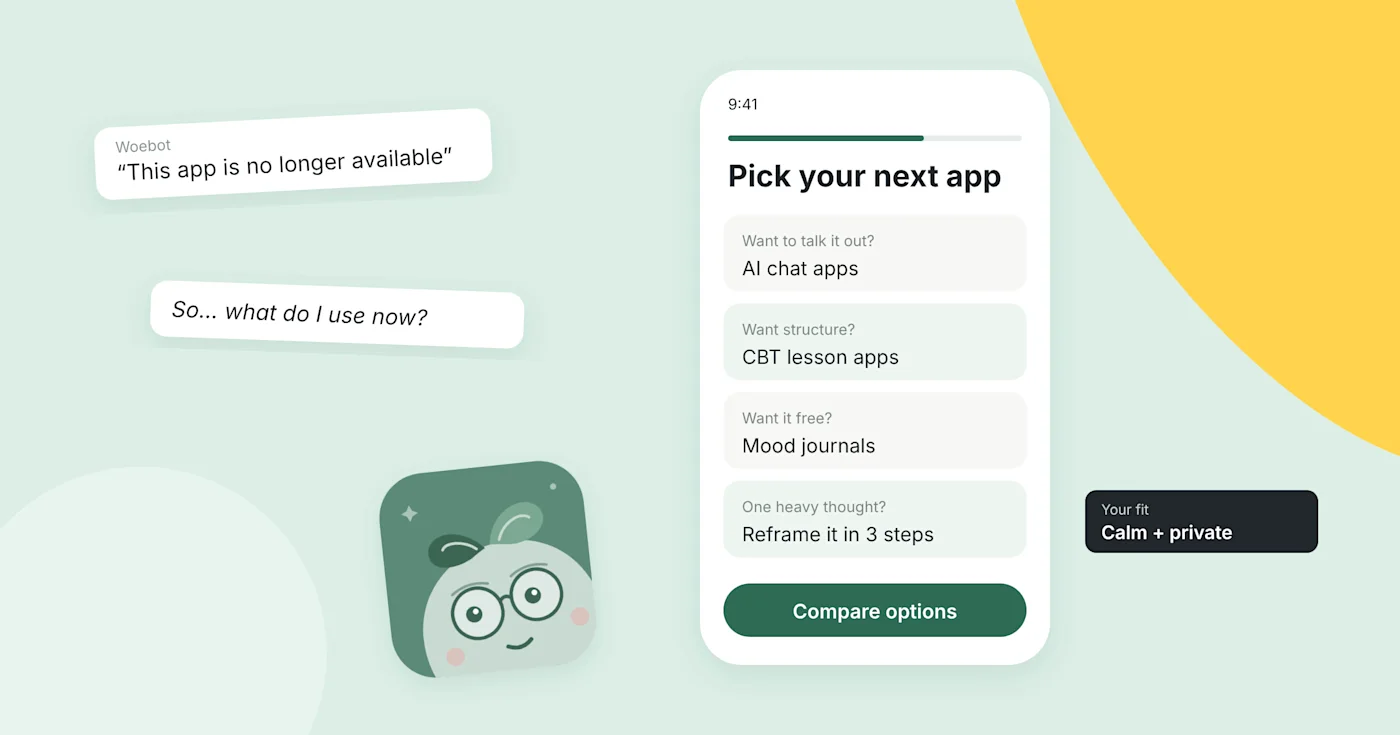
There are hundreds of mental health apps, and when you're already tired or anxious, choosing one can feel like another job. You don't need the "best" app. You need the one you'll actually open when a thought starts to spiral.
The quick answer: the best CBT and AI mental health apps right now are Wysa and Youper for AI chat, MindShift CBT and MindDoc for structured CBT tools, How We Feel for free mood check-ins, and Miranote for reframing one thought at a time. This guide helps you match the app to how you actually cope.
What a CBT app can (and can't) do for you
Cognitive behavioral therapy (CBT) is a well-studied approach that helps you notice how your thoughts, feelings, and actions affect each other (NHS). A good CBT app turns that into small exercises: catching a thought, spotting the thinking trap behind it, and finding a fairer way to see things.
What an app can't do is diagnose you, treat a condition, or replace a trained person. Think of these apps as a practice space between harder moments, not a substitute for care.
Why so many people are switching apps
The app landscape has shifted a lot. Woebot, one of the best-known CBT chatbots, retired its consumer app on June 30, 2025 (MobiHealthNews). Sanvello, another popular pick, is now mostly available only through some employers and health plans (ChoosingTherapy).
If you lost an app you relied on, our guide to Woebot alternatives walks through what to try next.
The 4 types of mental health apps
Most apps fall into one of four groups. Knowing which group suits you narrows things down fast.
1. AI chat apps
You type how you feel and a chatbot responds with questions and short CBT-style exercises. These suit you if talking things through helps you think.
Wysa is a friendly CBT chatbot with short exercises and mindfulness tools. It has a free version with a sample of each module, though most content needs a paid plan, according to a detailed ChoosingTherapy review. If it's not quite right for you, see our Wysa alternatives.
Youper combines AI chat with mood check-ins and exercises drawn from CBT, ACT, and DBT (IntuitionLabs). Its full features need a subscription after a free trial.
2. Structured CBT toolkits
These feel more like a course or a toolbox than a conversation. They suit you if you like clear steps and want to learn the skills properly.
MindShift CBT is a free app from Anxiety Canada with a thought journal, coping tools, and anxiety check-ins (HelpStartsHere BC). ChoosingTherapy notes it has no premium version.
MindDoc combines mood tracking, journaling, symptom check-ins, and courses. It has a limited free version and a paid plan (ChoosingTherapy).
3. Mood journals and check-ins
These help you notice and name feelings over time, which is often the first step in CBT. They suit you if you want something light you can do in a minute.
How We Feel is a free mood journal built with scientists from the Yale Center for Emotional Intelligence. It helps you label a feeling and suggests a small strategy.
4. Thought-reframing apps
These focus on one thing: taking a specific thought that's bothering you and working through it. They suit you if you don't want to chat, just untangle.
Miranote is our app, so weigh that. You write down the thought, Miranote helps you spot the thinking trap behind it, and then guides you to a fairer, kinder version. It's built for the 2am "why did I say that" moment.
How to choose: 5 questions to ask yourself
Do I want to talk, or do I want steps? Talkers often like Wysa or Youper. Step-followers often like MindShift CBT or MindDoc.
What will I pay? MindShift CBT and How We Feel are free. Most AI chat apps charge for full access.
When will I use it? If it's in hard moments, pick something you can finish in five minutes.
How private does it feel? Read the privacy policy. Look for clear answers on what's stored and whether you can delete it.
Does it make honest claims? Be cautious of any app that promises to cure or treat anxiety or depression.
Try one app for a week before deciding. Notice how you feel after using it, not just during.
Is AI therapy safe?
AI mental health apps can be a helpful place to practice skills, but they are self-help tools, not therapists. Even the best chatbot can misunderstand you, and none of them can respond to an emergency the way a person can.
A safer way to use them: treat the app as a notebook that asks good questions. If a conversation leaves you feeling worse, close it and reach out to someone you trust or a professional.
Try it now: the 3-minute reframe any app is built on
Every CBT app, whatever its style, teaches some version of this. Here's a worked example.
The thought: "I haven't heard back about the job. I obviously messed up the interview."
Step 1: Name the thinking trap. This is fortune telling: predicting a bad outcome as if it's already certain. A close cousin is mind reading.
Step 2: Check the evidence. How long do hiring decisions usually take? Did any part of the interview go well? Have you assumed the worst before and been wrong?
Step 3: Write a fairer thought. "I don't know the result yet. Some parts went well. Waiting is hard, but it doesn't mean I failed."
If you want more questions like the ones in step 2, our guide to Socratic questioning has seven. For the bigger picture, read what cognitive reframing is.
If you'd like a guided way to practise this, Miranote walks you through each step and helps you spot the thinking trap behind a thought.
When to get extra support
Apps can help you build skills, but they aren't therapy. If low mood, worry, or difficult thoughts have lasted for weeks, or they're affecting your sleep, work, or relationships, talking to a doctor or licensed therapist can help. Some people use an app alongside therapy, which can work well.
If you ever feel unsafe or think you might act on thoughts of harming yourself, please contact emergency help right away. In the US you can call or text 988. In the UK, Samaritans are available on 116 123. Elsewhere, call your local emergency number.
Start small
You don't have to find the perfect app today. Pick one that matches how you cope, give it a week, and be gentle with yourself while you figure out what helps. If a quiet, focused space sounds right, Miranote is there when you need it.
Questions about this
What is the best CBT app?
There isn't one best app for everyone. If you like talking things through, try an AI chat app like Wysa or Youper. If you want structure, MindShift CBT and MindDoc offer CBT tools and lessons. If you want something free and quick, How We Feel works well. If you want to reframe a single thought, try Miranote.
Are there free CBT apps?
Yes. MindShift CBT from Anxiety Canada is free, and How We Feel is free for daily mood check-ins. Many other apps, including Wysa and Miranote, let you try core features before paying. You can also practise CBT for free with a pen and paper using a simple thought record.
Can an AI app replace therapy?
No. AI and CBT self-help apps can help you practise skills and feel more in control day to day, but they don't diagnose, treat, or replace a licensed professional. If your thoughts feel persistent or overwhelming, a therapist or doctor can offer support an app can't.
Do CBT apps actually work?
CBT itself is a well-researched approach, and apps can make its exercises easier to practise. How much an app helps depends on the app and on how regularly you use it. Treat it as practice between harder moments, and look for apps that make honest, modest claims.
What happened to Woebot and Sanvello?
Woebot retired its consumer app on June 30, 2025. Sanvello is now mostly available only through some employers and health plans rather than as an open download. If you used either one, look for an app that keeps the part you valued most, such as chat, structure, or quick reframes.
Written by
Content writer
Emily Carter writes for MiraNote about everyday CBT skills, thinking traps, and calm, practical ways to untangle a hard thought.
Written and reviewed under our editorial guidelines.
More from the blog
All posts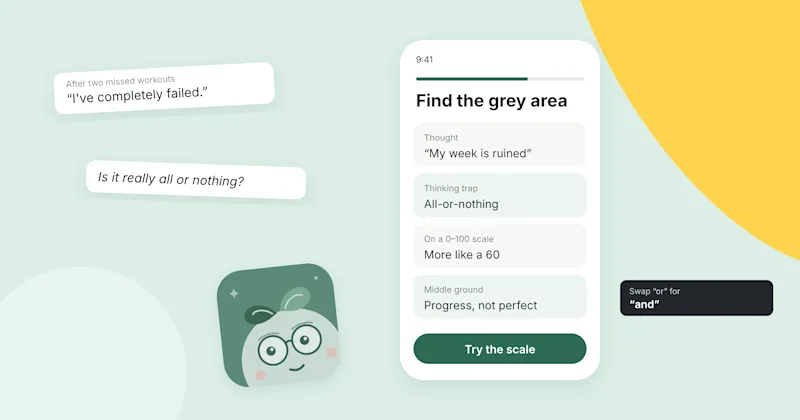
All-or-Nothing Thinking: Examples and How to Find the Middle Ground
One mistake doesn't mean you failed. See real all-or-nothing thinking examples, why your brain thinks in extremes, and 4 CBT steps to find the middle ground.
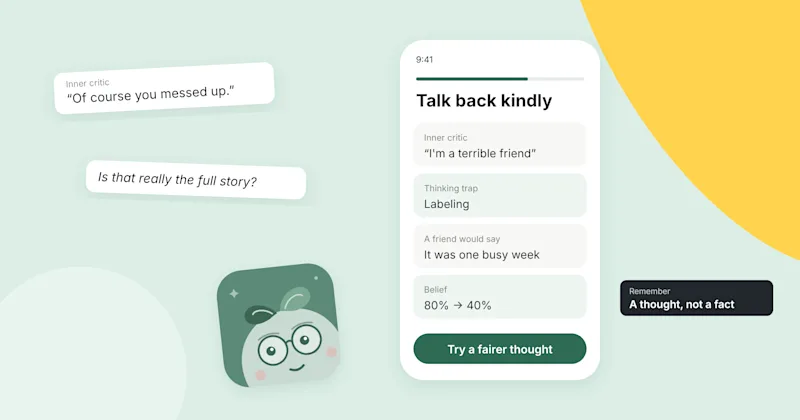
Negative Self-Talk: How to Quiet Your Inner Critic (Without Faking Positivity)
Your inner critic isn't telling the whole truth. Learn 5 CBT-based ways to quiet negative self-talk, plus a 5-minute reframe, no forced positivity needed.
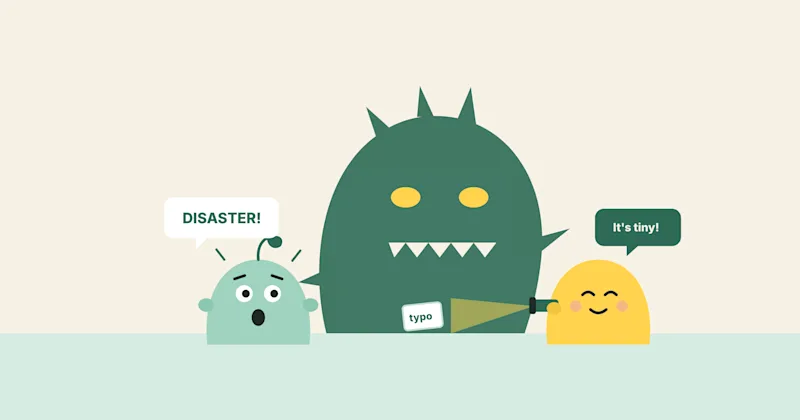
Catastrophizing: What It Is and How to Stop Expecting the Worst
Does your mind jump straight to the worst case? Learn what catastrophizing is, why it happens, and a simple 5-step CBT technique to stop it.