What is mind reading, and why does it feel so certain?
Mind reading is the habit of assuming you know what someone else thinks, without evidence. Here is how to spot it and what to write instead.

Mind reading is a cognitive distortion in which you treat a guess about someone else's thoughts as a fact. The classic version sounds like "they must think I'm incompetent" after one awkward pause in a meeting. The guess arrives fully formed, and because it arrives with a feeling attached, it does not feel like a guess at all.
Why it feels certain
Cognitive behavioural therapy describes automatic thoughts as fast, believable, and rarely checked. The NHS overview of CBT explains that the approach works by noticing these thoughts and examining them, rather than accepting them on arrival. Mind reading survives because it is almost never tested. You rarely ask the person what they thought, so the assumption never meets any evidence.
How to spot it
The thought is about what someone else believes, feels, or intends.
You have not been told this directly.
The "evidence" is a look, a pause, a short reply, or silence.
What to write instead
In a thought record, the balanced version is not forced positivity. It is a sentence that fits the evidence you actually have. For "they must think I'm incompetent", a balanced version might be: "I don't know what they think. The pause could mean many things, and I could ask."
MiraNote names mind reading as one of nineteen patterns so you can recognise it the next time the sentence shows up.
Questions about this
What does Mira, the AI, actually do?
Two optional things. While you pick patterns, Mira can suggest which of the nineteen distortions fit the thought you wrote. After a record, Mira Says explains the pattern, how to get past it, and offers an alternative thought for your exact situation. You always decide what fits.
Written by
Editors
Writing about cognitive distortions, thought records, and the everyday practice of examining a thought before believing it.
Written and reviewed under our editorial guidelines.
More from the blog
All cognitive distortions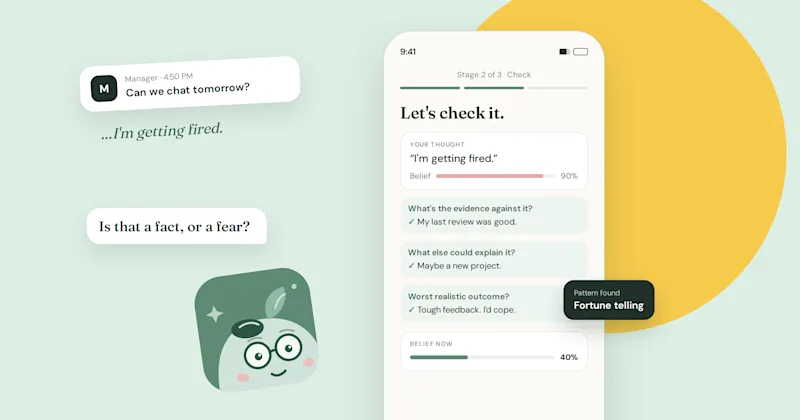
Socratic Questioning in CBT: 7 Questions to Ask Yourself
Your boss texts "can we chat tomorrow?" and your brain says you're fired. Here are 7 calm questions that help you check a thought before you believe it.
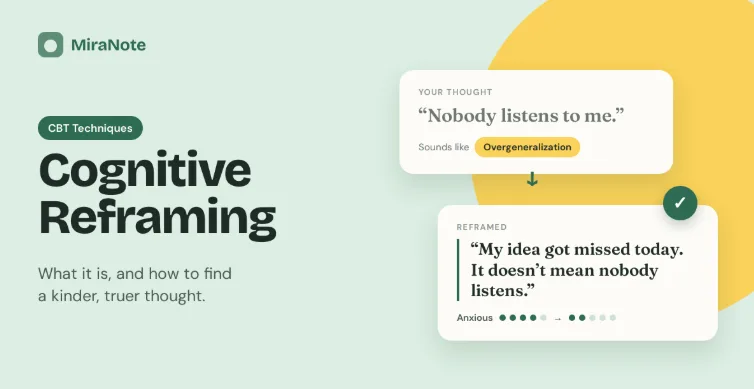
Cognitive Reframing: What It Is and How to Do It
A harsh thought isn't always the whole story. Learn how cognitive reframing works, with 5 simple steps, real examples, and a 5-minute exercise.

How to do a thought record in three minutes
The thought record is the core CBT exercise. This is the three-stage version MiraNote uses, with an example you can copy.