All-or-Nothing Thinking: Examples and How to Find the Middle Ground
One mistake doesn't mean you failed. See real all-or-nothing thinking examples, why your brain thinks in extremes, and 4 CBT steps to find the middle ground.
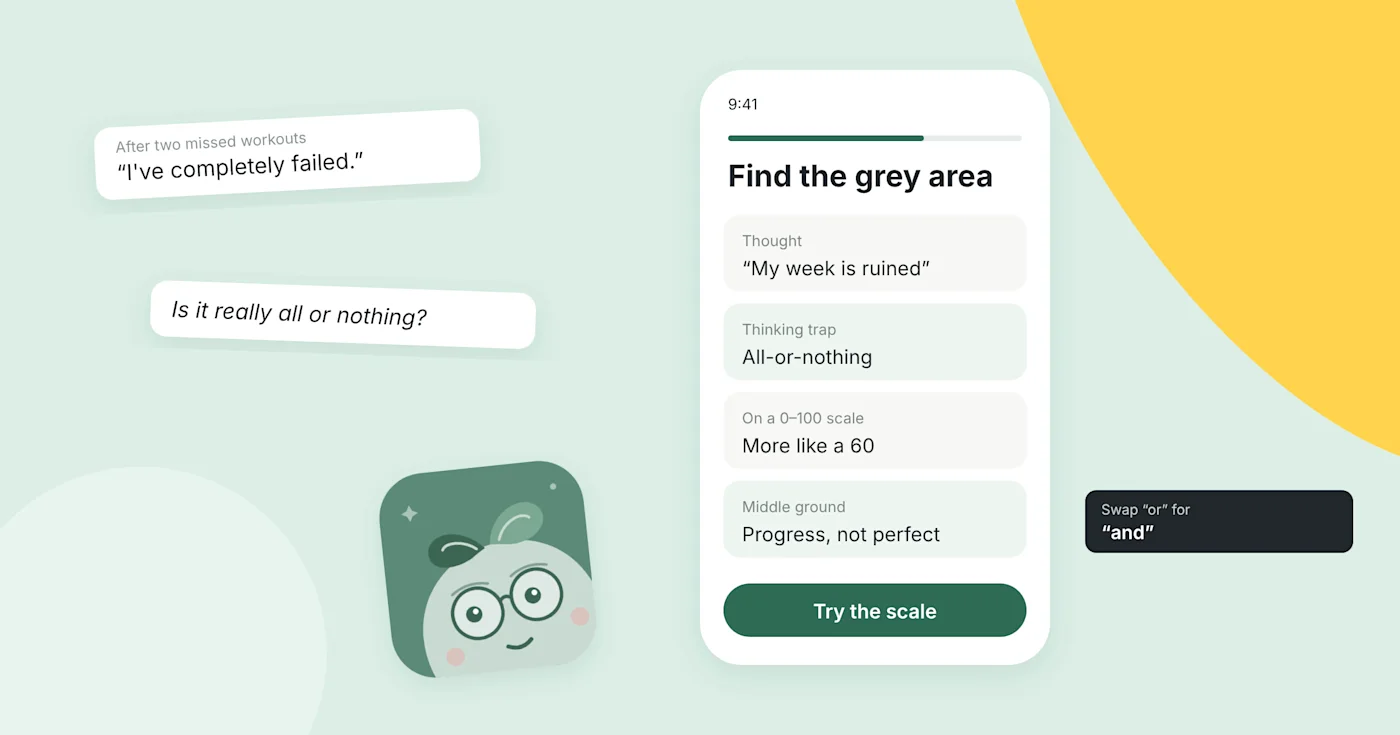
You ate one cookie, so the whole day is "ruined." You got one piece of feedback, so you're "terrible at your job." If your mind tends to see things as perfect or a total failure, you're not alone.
All-or-nothing thinking is a thinking trap where you see things in only two extremes, with nothing in between. It's also called black-and-white thinking. The way out isn't to force yourself to think positively. It's to notice the extremes and look for the shades of grey you're missing.
What is all-or-nothing thinking?
All-or-nothing thinking means judging yourself, other people, or situations in polarized terms: success or failure, good or bad, always or never. Psychology Tools describes it as making "extreme judgments or polarized evaluations," and links it to the early cognitive therapy work of Aaron Beck (Psychology Tools).
It's one of the most common cognitive distortions, the thinking traps our minds fall into under stress. It can feel like having high standards, but in practice it leaves almost no room to succeed.
All-or-nothing thinking examples
Here's what it often sounds like in everyday life:
At work: "My presentation had one awkward slide. It was a disaster."
With health goals: "I missed the gym twice this week. I might as well quit."
In relationships: "We had an argument. Maybe we're just not right for each other."
About yourself: "If I'm not the best, I'm a failure."
About others: "She forgot to text me back. She clearly doesn't care."
With words like always and never: "I always mess things up." "Nothing ever works out for me."
Notice the giveaway words: always, never, ruined, perfect, total, completely, nothing, everything. When you hear them in your head, it's worth pausing.
Why does my brain think in extremes?
Black-and-white thinking is fast. When you're stressed, tired, or anxious, your brain reaches for quick, simple judgments. Some researchers suggest this kind of thinking may have helped humans react quickly in uncertain situations, even if it misses nuance (Psychology Tools).
It often travels with perfectionism. If the only acceptable result is perfect, then anything less feels like failure. It also tends to show up alongside other traps, like catastrophizing (jumping to the worst outcome) and the harsh labels of negative self-talk.
How to stop all-or-nothing thinking: 4 steps
1. Catch the extreme word
Listen for always, never, totally, ruined, perfect. Then label it: "That's an all-or-nothing thought." Naming the pattern creates a bit of distance between you and the thought.
2. Put it on a scale from 0 to 100
This is called a continuum, a classic CBT technique. Instead of "success or failure," ask: on a scale of 0 to 100, where did this really land? A presentation with one awkward slide might be a 75. That's not a disaster. That's a decent day.
3. Look for the evidence in between
Ask: What went okay? What partly worked? What would a neutral observer say? Our guide to Socratic questioning has more questions you can use.
4. Swap "or" for "and"
All-or-nothing thinking loves "or." Try "and" instead: "I made a mistake, and I did most of it well." "We argued, and we still care about each other." Both things can be true at once.
Try it now: a 3-minute grey-area reframe
The thought: "I missed my workout twice this week. I've completely failed at getting healthy." Belief: 85%.
Step 1: Name the trap. All-or-nothing thinking: two missed workouts became "completely failed."
Step 2: Rate it on a scale. You went three times out of five, drank more water, and slept a bit better. On a 0 to 100 scale, the week might be a 60.
Step 3: Write the middle-ground version. "I didn't hit every workout, and I still made progress. Missing a day isn't the same as giving up."
Re-rate your belief in the original thought. If it dropped from 85% to 30%, you've found the grey area. Our three-minute thought record uses the same steps on paper.
If you'd like a guided way to practise this, Miranote walks you through each step and helps you spot the thinking trap behind a thought.
When to get extra support
Everyone thinks in black and white sometimes. But if extreme thinking is constant, keeps you from trying things, or comes with low mood or anxiety that lasts for weeks, it's worth talking to a doctor or licensed therapist. CBT with a professional can help you work on these patterns in depth.
If your thoughts ever turn to harming yourself, please reach out right away. In the US you can call or text 988. In the UK, Samaritans are available on 116 123. Elsewhere, call your local emergency number.
Life happens in the grey
Most of life isn't perfect or ruined. It's somewhere in the middle, and that middle is where real progress lives. Each time you catch an extreme and find the grey, you're building a more flexible, kinder way of seeing things. Miranote can help you practise, one thought at a time.
Questions about this
What is an example of all-or-nothing thinking?
A common example is "I ate one unhealthy snack, so my whole diet is ruined." Another is "I got one thing wrong in the meeting, so I'm terrible at my job." In each case, one small part of a situation is treated as if it defines the whole thing, with no middle ground.
Is all-or-nothing thinking the same as black-and-white thinking?
Yes. All-or-nothing thinking, black-and-white thinking, and dichotomous thinking all describe the same pattern: seeing situations, people, or yourself in only two extreme categories, like success or failure, and missing everything in between.
Is all-or-nothing thinking linked to perfectionism?
Often, yes. If the only acceptable outcome is perfect, anything less can feel like failure. That's why people with perfectionist tendencies frequently notice all-or-nothing thoughts. Learning to rate things on a scale instead of pass or fail can help ease that pressure.
How do I stop thinking in black and white?
Start by catching extreme words like always, never, or ruined. Then rate the situation on a scale from 0 to 100, look for evidence in between, and rewrite the thought using "and" instead of "or." With regular practice, the middle ground starts to come more naturally.
Written by
Content writer
Emily Carter writes for MiraNote about everyday CBT skills, thinking traps, and calm, practical ways to untangle a hard thought.
Written and reviewed under our editorial guidelines.
More on cognitive distortions
All cognitive distortions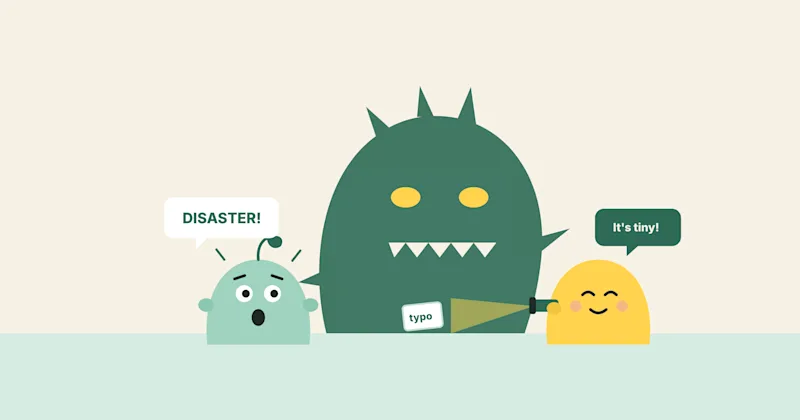
Catastrophizing: What It Is and How to Stop Expecting the Worst
Does your mind jump straight to the worst case? Learn what catastrophizing is, why it happens, and a simple 5-step CBT technique to stop it.
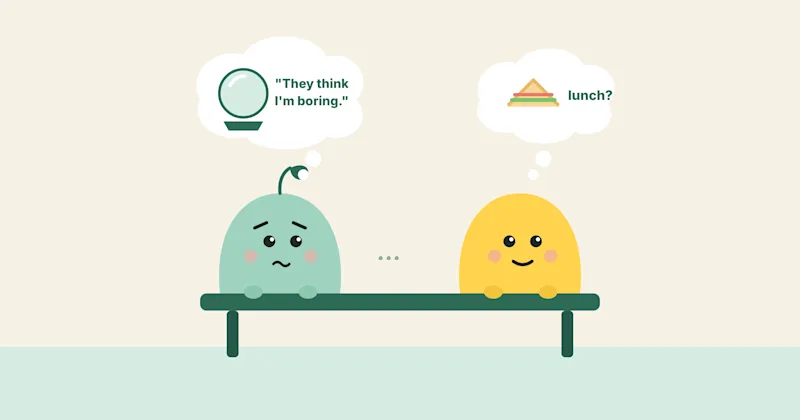
What is mind reading, and why does it feel so certain?
Mind reading is the habit of assuming you know what someone else thinks, without evidence. Here is how to spot it and what to write instead.
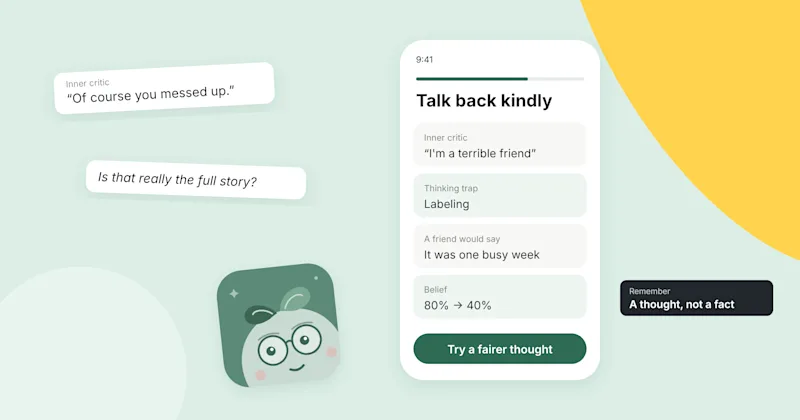
Negative Self-Talk: How to Quiet Your Inner Critic (Without Faking Positivity)
Your inner critic isn't telling the whole truth. Learn 5 CBT-based ways to quiet negative self-talk, plus a 5-minute reframe, no forced positivity needed.