How to do a thought record in three minutes
The thought record is the core CBT exercise. This is the three-stage version MiraNote uses, with an example you can copy.
A thought record is a structured way to catch an automatic thought, examine it, and write a more accurate version. It comes from cognitive behavioural therapy and is one of the most widely used exercises in it. The Beck Institute describes this cycle of identifying, evaluating, and responding to thoughts as central to how CBT works.
Stage one: capture
Write the situation in one line, then the thought exactly as it appeared, then rate how strongly you feel it. Example: "Presented the update. Thought: nobody listens to me. Anxious, 4 out of 5."
Stage two: examine
Name the pattern. In the example, "nobody listens to me" is overgeneralization, one event treated as a rule. Then list the evidence for the thought and the evidence against it. Two people asked follow-up questions, which does not fit "nobody".
Stage three: reframe
Write the balanced thought and rate the feeling again. "Some people were distracted, and two engaged with the update." Anxious, 2 out of 5. The shift is the point, not perfection.
Three stages, about three minutes. Done regularly, the record trains you to notice the thought before you believe it.
Questions about this
What is a thought record?
A thought record is a short CBT exercise. You write down a situation, the automatic thought it triggered, and how strongly you felt it. Then you look at the evidence and write a more balanced version. In MiraNote this takes three stages and about three minutes.
Is MiraNote a replacement for therapy?
No. MiraNote is a self-help tool built around the thought-record structure used in cognitive behavioural therapy (CBT). It can sit alongside therapy, and many people use it to bring examined thoughts to their next session, but it is not a clinical service.
Written by
Editors
Writing about cognitive distortions, thought records, and the everyday practice of examining a thought before believing it.
Written and reviewed under our editorial guidelines.
More from the blog
All thought records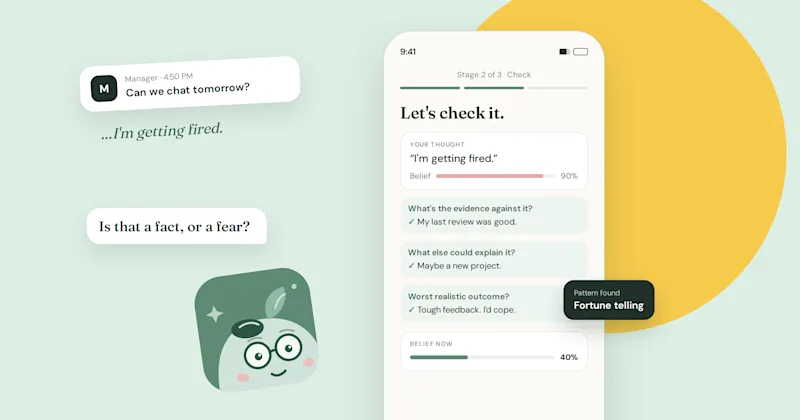
Socratic Questioning in CBT: 7 Questions to Ask Yourself
Your boss texts "can we chat tomorrow?" and your brain says you're fired. Here are 7 calm questions that help you check a thought before you believe it.
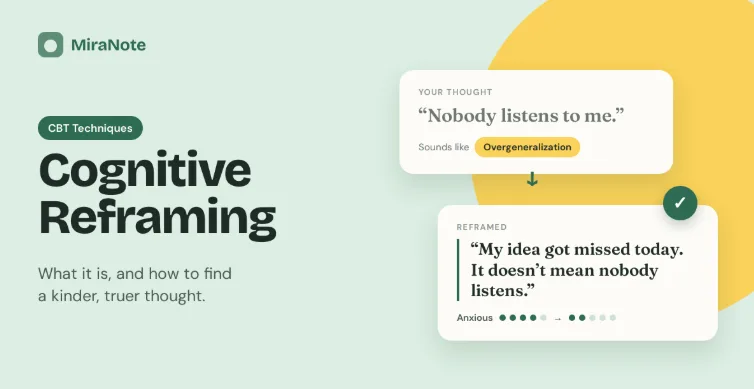
Cognitive Reframing: What It Is and How to Do It
A harsh thought isn't always the whole story. Learn how cognitive reframing works, with 5 simple steps, real examples, and a 5-minute exercise.
What is mind reading, and why does it feel so certain?
Mind reading is the habit of assuming you know what someone else thinks, without evidence. Here is how to spot it and what to write instead.