Overthinking at Work: 5 Ways to Stop Second-Guessing Yourself
Rereading emails, replaying meetings, dreading "can we chat?" Here are 5 CBT-based ways to stop overthinking at work and finally switch off.
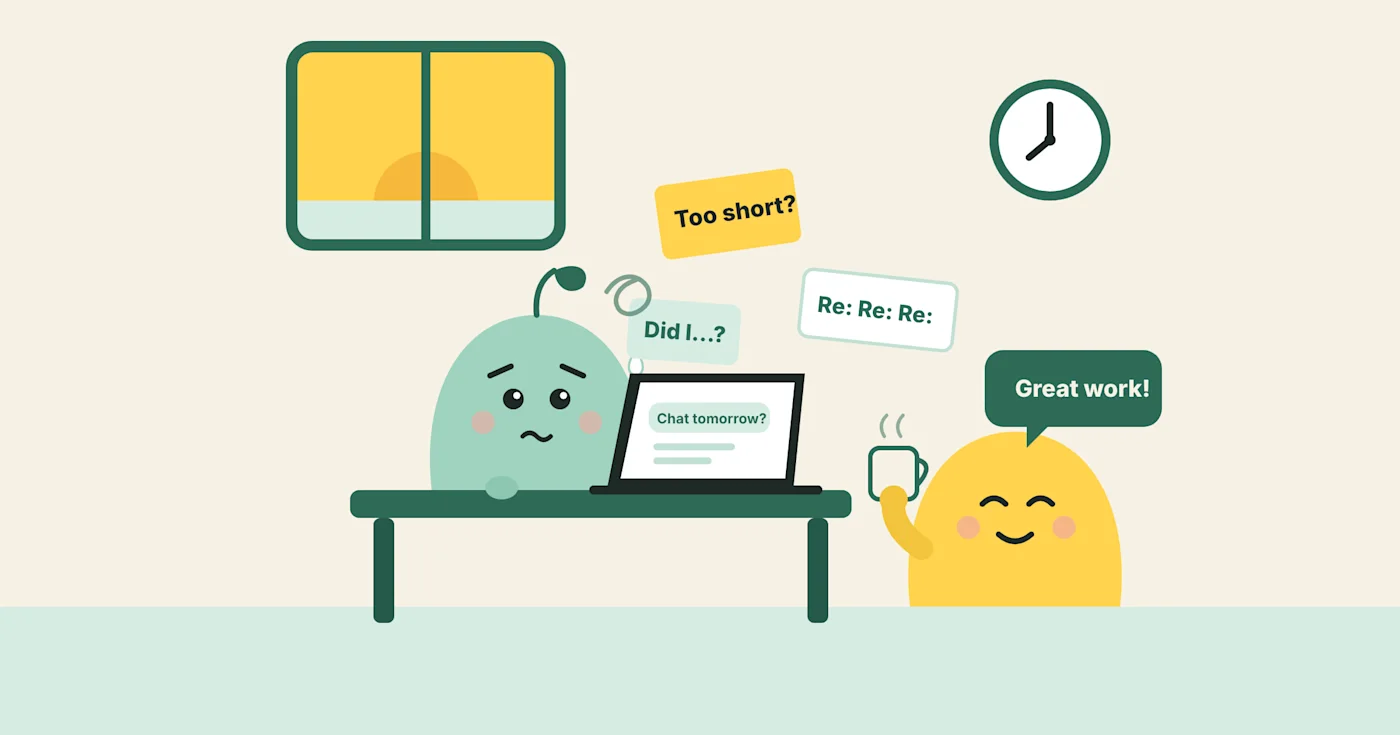
Your manager writes "Can we chat tomorrow?" and the rest of your evening disappears. You replay last week's presentation. You reread the email you sent at 4:58pm. By bedtime, you've written your own performance review, and it isn't kind.
Overthinking at work is common, especially if you care about doing a good job. But it drains the energy you need for the actual work, and it follows you home. Here's how to catch it, check it, and switch off.
What overthinking at work looks like
Rereading emails and messages before (and after) you send them
Replaying meetings to find what you "got wrong"
Reading meaning into short replies, calendar invites or a quiet manager
Putting off tasks because you're stuck deciding the "perfect" way
Thinking about work all evening, then feeling tired before the day starts
The thinking traps behind it
Mind reading: "They didn't say thanks, so they think my work is bad."
Catastrophizing: "One mistake and I'll lose my job."
All-or-nothing thinking: "If it isn't perfect, it's a failure."
Disqualifying the positive: "The project went well, but that was luck."
Spotting the trap is the turning point. It changes "this is true" into "this is one way of seeing it."
How to stop overthinking at work: 5 steps
1. Write the exact thought down
Vague dread is hard to fight. A sentence isn't. "My manager wants to talk because I messed up the report" is something you can actually check.
2. Check the evidence like a colleague would
What actually supports the thought? What doesn't? What would a fair-minded coworker say? Often the evidence is thin: managers book chats for all kinds of reasons, and your last feedback was fine.
Want a faster way to do this between meetings? MiraNote walks you through it in about three minutes: write the thought, spot the thinking trap, and finish with a calmer, more balanced version you can take back to your desk. Download on the App Store or get it on Google Play. It's free to try.
3. Turn worry into one next step
Ask: "Is there something I can do about this today?" If yes, do the smallest version: send the follow-up, ask the question, fix the typo. If no, write it down and let it wait. Action quiets the loop; replaying doesn't.
4. Use "good enough" on purpose
For routine work, decide what "done" looks like before you start. Two read-throughs of an email, not seven. Perfectionism feels like care, but it often just means more time spent worrying.
5. Build a shutdown ritual
At the end of the day, take five minutes to note what's done, what's next, and anything still bothering you. Then close the laptop. Work-related rumination is linked to poorer sleep and more fatigue, and one randomised trial found that online CBT aimed at it improved both (Querstret et al., Frontiers in Psychology).
Try it now: a 3-minute work worry check
The thought: "My manager said 'Can we chat tomorrow?' I'm in trouble."
Rate it: how much do you believe it? Say 75%.
Name the trap: mind reading and catastrophizing.
Check the evidence: no complaints recently, the project is on track, and she often books quick chats about planning.
Reframe: "I don't know what it's about yet. It's probably routine. If it's feedback, I can listen and handle it."
Re-rate: maybe 30% now. Same situation, a lot less weight.
For the after-hours version of this loop, see our guide on how to stop overthinking at night. And if you're not sure whether you're replaying the past or bracing for the future, rumination vs worry breaks it down.
When to get extra support
Some work stress is normal. But if worry about work affects your sleep most nights, makes it hard to concentrate, or you dread going in for weeks at a time, talk to a GP, doctor or licensed therapist. Many workplaces also offer a free, confidential employee assistance programme (EAP).
If you ever feel unsafe or think you might act on thoughts of harming yourself, please contact emergency help right away. In the US you can call or text 988. In the UK, Samaritans are available on 116 123. Elsewhere, call your local emergency number.
Do the work, not the worry
Caring about your job is a strength. Overthinking just borrows that care and spends it on stories. Catch the thought, check it, and turn it into one useful step.
MiraNote makes that a 3-minute habit you can do between meetings. Download MiraNote for iPhone or for Android, and try it the next time a work thought follows you home.
Questions about this
Why do I overthink everything at work?
Work comes with feedback, deadlines and people whose opinions matter to you, so it is easy for your mind to fill gaps with worst-case stories. Caring about doing a good job, perfectionism and unclear expectations can all make it worse. Naming the thinking trap behind the worry is a good first step.
How do I stop rereading emails before I send them?
Set a simple rule before you write: for routine emails, read it twice, check the recipient and the key point, then send. If the urge to recheck comes back, notice the thought behind it, such as "they will think I am careless", and ask what the evidence actually says.
How do I stop thinking about work after hours?
Try a short shutdown ritual at the end of the day. Write down what is done, what is next, and anything still on your mind, then close the laptop. If a work worry pops up later, jot it down for tomorrow instead of solving it at home. Research links work-related rumination to poorer sleep, so a clear end point really helps.
Can an app help with overthinking at work?
Yes. MiraNote gives you a quick, structured way to check a work worry between meetings: write the thought, spot the thinking trap, and finish with a calmer, more balanced version in about three minutes. It is a self-help tool, not therapy, and it is free to try on iPhone and Android.
Written by
Content writer
Emily Carter writes for MiraNote about everyday CBT skills, thinking traps, and calm, practical ways to untangle a hard thought.
Written and reviewed under our editorial guidelines.
More from the blog
All posts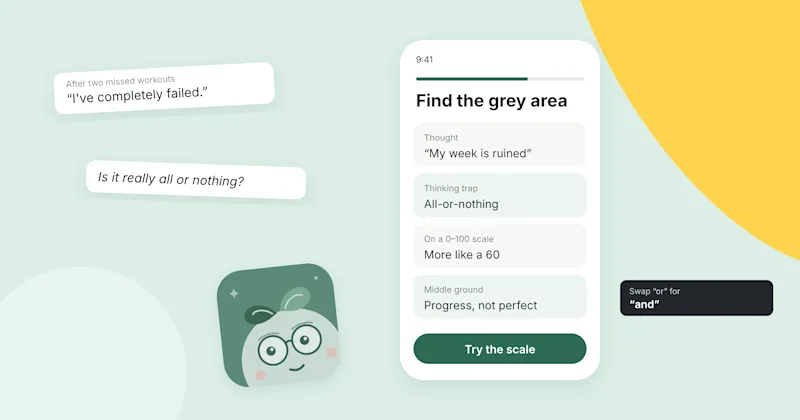
All-or-Nothing Thinking: Examples and How to Find the Middle Ground
One mistake doesn't mean you failed. See real all-or-nothing thinking examples, why your brain thinks in extremes, and 4 CBT steps to find the middle ground.
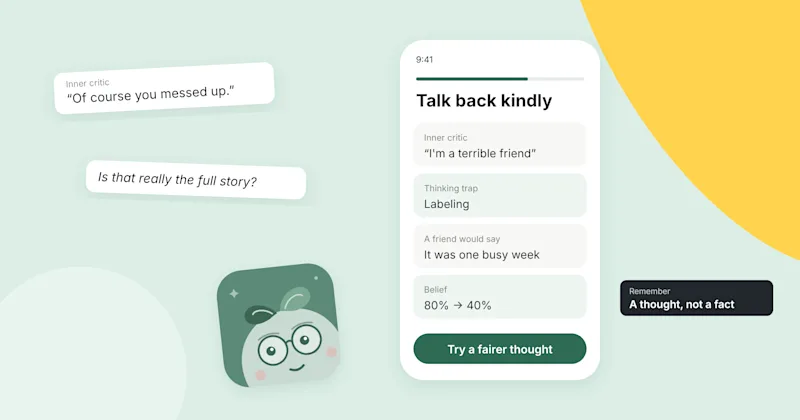
Negative Self-Talk: How to Quiet Your Inner Critic (Without Faking Positivity)
Your inner critic isn't telling the whole truth. Learn 5 CBT-based ways to quiet negative self-talk, plus a 5-minute reframe, no forced positivity needed.
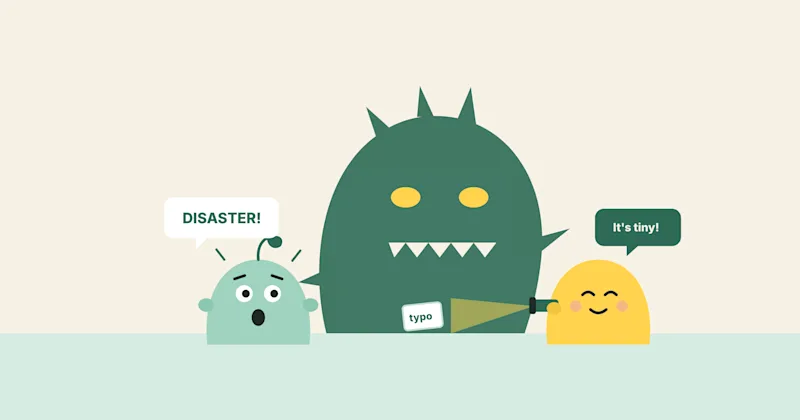
Catastrophizing: What It Is and How to Stop Expecting the Worst
Does your mind jump straight to the worst case? Learn what catastrophizing is, why it happens, and a simple 5-step CBT technique to stop it.