Rumination vs Worry: How to Tell Them Apart (and What Helps)
Stuck on "why did I?" or "what if?" Learn the difference between rumination and worry, how to spot each one, and what actually helps.
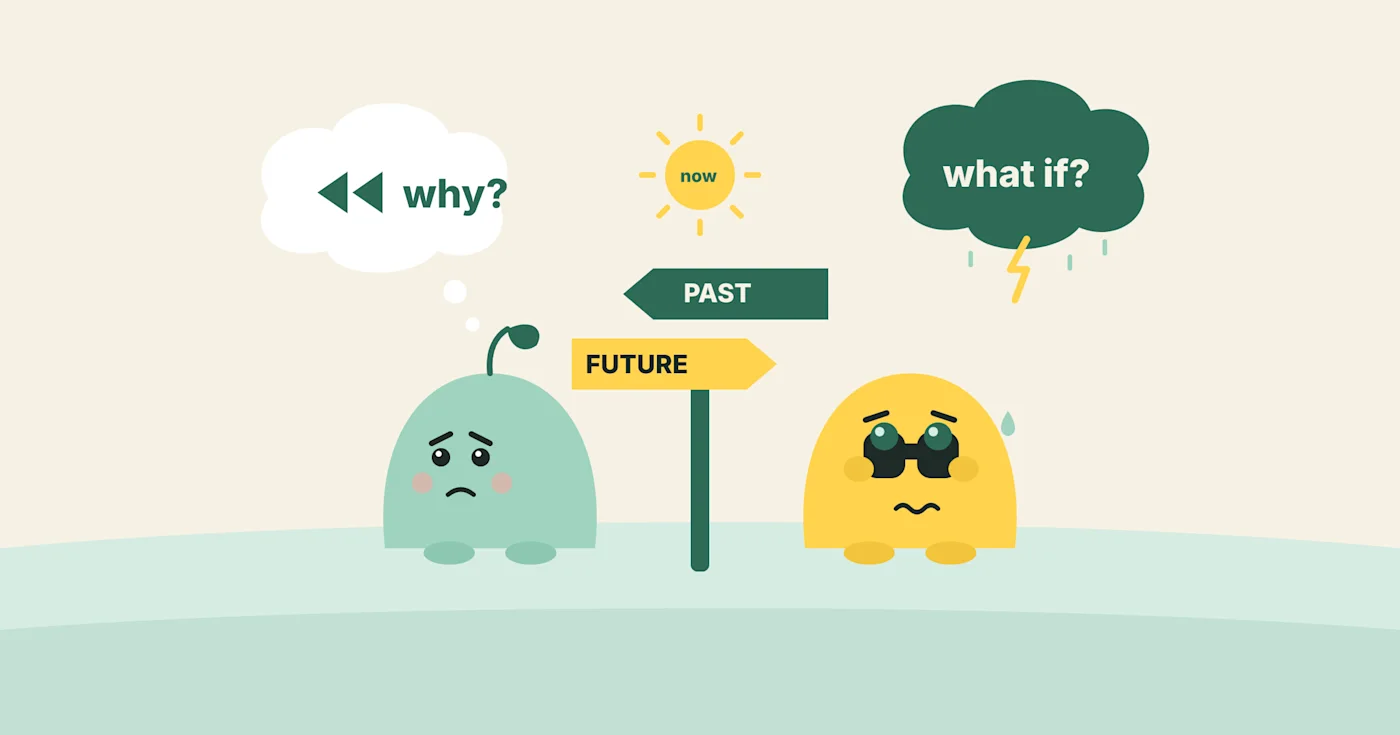
One kind of overthinking sounds like "Why did I say that? Why am I always like this?" The other sounds like "What if it goes wrong? What if they say no?"
The first is rumination. The second is worry. They feel similar, they often show up together, and both can keep you stuck in your head. But knowing which one you're doing makes it much easier to step out of it. Here's how to tell them apart, and what helps each one.
Rumination vs worry: the quick answer
Rumination looks backward. It replays the past and asks "why?" It's often tied to sadness, regret or shame.
Worry looks forward. It rehearses the future and asks "what if?" It's often tied to anxiety and fear.
Both are forms of what psychologists call repetitive negative thinking. A large meta-analysis found the two are strongly linked, which is why many people do both (Stade & Ruscio, 2022).
How to spot which one you're doing
Catch the sentence in your head and check three things:
Time: is it about something that already happened, or something that might happen?
Question: is it "why did this happen?" or "what if this happens?"
Feeling: is it heavy and low (more rumination), or tense and jumpy (more worry)?
Example: "I can't believe I froze in that meeting. Why can't I ever speak up?" That's rumination. "What if I freeze again on Thursday and everyone notices?" That's worry. Same event, two different loops.
What helps with rumination
Swap "why" for "how"
"Why am I like this?" has no satisfying answer, so your brain keeps searching. Researchers who study rumination have found that more concrete, "how" questions tend to be more helpful than abstract "why" questions (The Carlat Report). Try: "How could I handle that moment next time?"
Name the thinking trap
Rumination often runs on labelling ("I'm useless") and overgeneralizing ("I always mess up"). Naming the trap turns a verdict into a thought you can question.
Write a fairer version
"I froze for a few seconds. That happens to lots of people. Next time I'll jot down one point before the meeting." Accurate, kind and useful.
What helps with worry
Ask: can I act on this now?
If yes, take one small step. If no, write it down for later. Worry feels like planning, but real planning ends in an action.
Name the thinking trap
Worry usually runs on catastrophizing ("it'll be a disaster") and fortune telling ("I just know it'll go wrong"). Ask: what's the most likely outcome, not the worst one?
Give it a time slot
A short daily "worry window" can stop worry from leaking into the whole day. Our guide on how to stop overthinking explains how to set one up.
Not sure which loop you're in? MiraNote can help. You write the thought, it helps you spot the pattern behind it, whether that's labelling, catastrophizing or something else, and you finish with a calmer version in about three minutes. Download on the App Store or get it on Google Play. It's free to try.
Try it now: one thought, two loops
Pick something that's on your mind and write two sentences:
The backward thought: "Why did I…?"
The forward thought: "What if…?"
Now answer each one differently. For the backward one, ask "how could I handle it next time?" For the forward one, ask "what's one small thing I can do, or when will I deal with this?" Notice how both answers move you out of the loop and toward something you can actually do.
When to get extra support
Everyone ruminates and worries sometimes. But if these loops take up hours of your day, affect your sleep, work or relationships, or come with low mood or anxiety that won't lift, talk to a GP, doctor or licensed therapist. Therapies like CBT have specific tools for both.
If you ever feel unsafe or think you might act on thoughts of harming yourself, please contact emergency help right away. In the US you can call or text 988. In the UK, Samaritans are available on 116 123. Elsewhere, call your local emergency number.
Out of the loop, into the moment
Rumination pulls you into the past. Worry drags you into the future. The way out is the same: catch the thought, name the trap, and bring it back to something real you can do today.
MiraNote makes that a 3-minute habit. Download MiraNote for iPhone or for Android, and try it the next time a "why" or a "what if" won't let go.
Questions about this
What is the difference between rumination and worry?
Rumination looks backward. It replays the past and asks "why did this happen?", and it often comes with sadness or regret. Worry looks forward. It rehearses the future and asks "what if?", and it often comes with anxiety. Both are forms of repetitive negative thinking.
Can you ruminate and worry at the same time?
Yes, and many people do. You might replay a mistake (rumination) and then start predicting what it will lead to (worry). Research shows the two are strongly linked. The same CBT skills help with both: catch the thought, name the thinking trap, and bring it back to one small, concrete step.
How do I stop ruminating about the past?
Try swapping "why" questions for "how" questions. "Why am I like this?" keeps you stuck, while "How could I handle that next time?" points to an action. It also helps to name the thinking trap, such as labelling or overgeneralizing, and write a fairer, kinder version of the thought.
Can an app help with rumination and worry?
Yes. MiraNote helps you catch the thought, spot the pattern behind it, whether it is a backward "why" loop or a forward "what if" loop, and write a calmer, more balanced version in about three minutes. It is a self-help tool, not therapy, and it is free to try on iPhone and Android.
Written by
Content writer
Emily Carter writes for MiraNote about everyday CBT skills, thinking traps, and calm, practical ways to untangle a hard thought.
Written and reviewed under our editorial guidelines.
More from the blog
All posts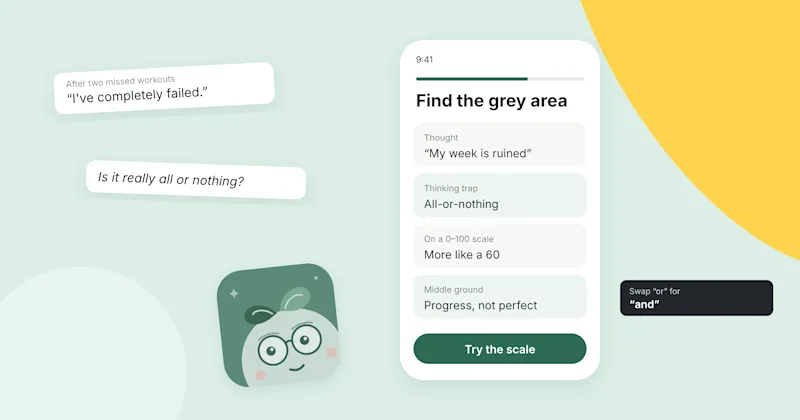
All-or-Nothing Thinking: Examples and How to Find the Middle Ground
One mistake doesn't mean you failed. See real all-or-nothing thinking examples, why your brain thinks in extremes, and 4 CBT steps to find the middle ground.
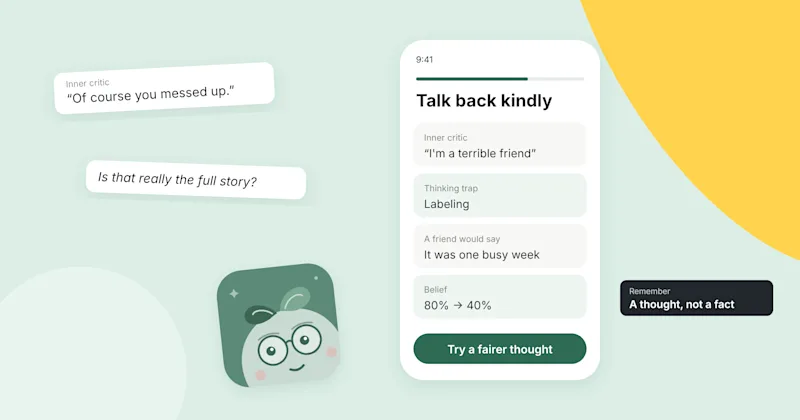
Negative Self-Talk: How to Quiet Your Inner Critic (Without Faking Positivity)
Your inner critic isn't telling the whole truth. Learn 5 CBT-based ways to quiet negative self-talk, plus a 5-minute reframe, no forced positivity needed.
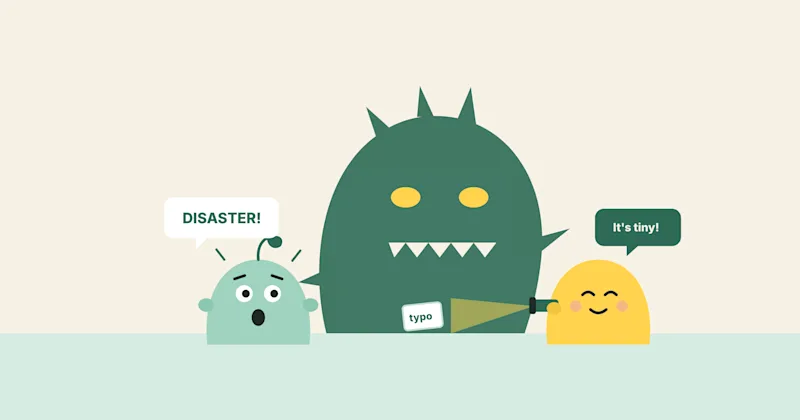
Catastrophizing: What It Is and How to Stop Expecting the Worst
Does your mind jump straight to the worst case? Learn what catastrophizing is, why it happens, and a simple 5-step CBT technique to stop it.